Showing posts with label contemporary. Show all posts

Wednesday, February 22, 2012

Freedom by Jonathan Franzen, read by David Ledoux

 // 
 // 
[24 hours, 9 minutes]


I came away from Freedom not sure how to feel, but definitely a little more sullen that I was when I started it. I enjoyed Franzen's exploration of mankind's fallibility through his characters. However, even though these characters were compelling in their sadnesses and failings and the ways the went about dealing with conflict, I can only deal with a certain amount of hopelessness, especially in audiobook form for 24 hours and 9 minutes. I felt that there were not enough bright moments to give me the sense that the struggle of life is worth it.

This book received a lot of criticism after being called The Next Great American Novel because critics (and a lot of people writing GoodReads reviews) argued that it is only The Great American Novel for white, middle-class, green liberals. I think this is argument is a waste of breath, but here is my response to it: There are three levels to multicultural theory: 3) Universal - we are all human and share certain characteristics and sentiments as a result. 2) Group - We belong to cultural groups that tend to determine our culture, values, etc. 1) Individual - We are all individuals and thus different from everyone else. Freedom, though people criticizing it tend to focus on the book's emphasis on level 2, exists at all three of those levels. Novels should be judged for what they are, not what they aren't. Call it The Great American Novel if you want. But I think it presents a pretty bleak portrayal of America and suburban life in America. However, it is definitely worth reading or listening to. It asks a lot of worthwhile questions and captures the feelings of a particular culture during our time period. It's an important book to have read.

Though David Ledoux's reading is seamless and nearly transparent, Freedom may not be the right book for you if you are unable to devote nearly all of your attention to it. I found myself pausing or losing track of what I was doing pretty often to concentrate better on the story. Also, at 24 hours long, this audiobook may be too demanding for casual listeners.


Caleb's Crossing by Geraldine Brooks, read by Jennifer Ehle

 // 
♪ // 
[12 hours, 10 mins)


Based on the story of the first Native American to go to Harvard through the eyes of a secret childhood friend - a puritan woman and the daughter of a minister. Wonderfully constructed. A story of one woman's quest for knowledge in a society that forbid it to her. Touches on a number of powerful themes: religion, the nature of sin, ethnocentrism, feminism, colonization. This book would have been a wonderful choice for someone to analyze with post-colonial theory for a literary theory class. It would also have fit well in a history class focusing on the settlement of the Americas. This novel tells the story of colonization from a contemporary perspective, one that brings up all the right misgivings, hypocracies, and ethical dilemmas surrounding this period of American history, and does so with heart, by telling a story that matters. 


recommended for: fans of historical fiction & early american history, general readers


While the story seemed to lend itself well to an oral interpretation, Jennifer Ehle over-enunciates her words. It comes off as unnatural and disjointed. She also uses D instead of T in certain places. I am unfamiliar with her other work and do not know if this is typical of her reading.  However, I pushed through and it became less noticeable over time. I would definitely sample this book before buying it outright. Determine your level of comfort with the language - though this book is contemporary, it takes place in the 1600s and Brooks' research into the language reflects that. Also, decide if Ehle's pronunciation, which I'm assuming is also a reference to that time period, is too off-putting to listen to for 12 hours and 10 minutes.

Friday, January 27, 2012

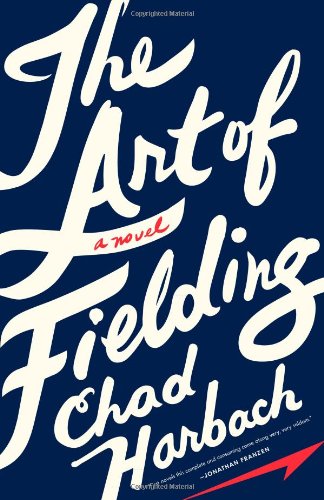
The Art of Fielding by Chad Harbach, read by Holter Graham


★ // 
 //  
[16 hours]

Chad Harbach's debut novel "The Art of Fielding" came out as a 2011 favorite among readers and critics alike.

Full of beautiful musings on life, literature, family, college and baseball, "The Art of Fielding" follows five characters whose lives intersect at the fictional Westish College: Henry Skrimshander, a shortstop with awe-inspiring talent and a intrinsic love for the game; Mike Schwartz, his best friend and the Westish Harpooners' team captain; Owen Dunne, Henry's "gay mulatto roommate"; Guert Affenlight, the college president; and his recently divorced daughter, Pella.

Though "The Art of Fielding" is essentially a book about baseball (and some people on the fringes of it), it is regardless a work of literary fiction - bringing beauty and a sense of meaning into what goes on on the field, and in addition, bringing on that resonance and discourse with other works of literature (most prominently with Moby Dick, as the fictional school boasts an obsure tie to Herman Melville.)

As first novels tend to do, "The Art of Fielding" has a few weaknesses, though they do not interfere too much with what I took away from the novel as a whole. I thought the development of the "dangerous affair" should have been better developed from Owen's side, and had it been, I would have felt less uneasy and disturbed by the whole affair, though only slightly.

The bottom line: The chatter surrounding this book elevated my expectations too high. Regardless, I thought it was a worthwhile read. Strong, well-defined characters (for the most part). And the baseball talk brought on a sense of nostalgia for me, having grown up following my brother's traveling baseball team around the midwest.

Holter Graham, the audiobook reader, really made the novel come alive for me. As far as audiobook readers go, I group them into four categories: one, the ones I absolutely cannot stand; two, those whose voices interfere with the story in a minor sort of way - unclear, distracting, annoying; three, those who disappear into the story; and four, those who add a little something extra to the experience of the work. I would place Holter Graham's reading just between the third and forth categories.

--

“Maybe it wasn’t even baseball that he loved but only this idea of perfection, a perfectly simple life in which every move had meaning, and baseball was just the medium through which he could make that happen.”